
SERENA LI | Updated: 2026-11-09
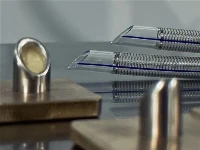
Catheter tip forming, often referred to as melt tipping or tip forming, is a critical process in the manufacturing of medical catheters. By heating and reshaping the distal end of a tube, a smooth, atraumatic tip can be created to improve patient safety, insertion comfort, and clinical performance. At the heart of this process is the tip forming die (or melt head mold), which defines the final tip geometry, surface quality, and dimensional consistency.
What is a Catheter Tip-Forming Die?
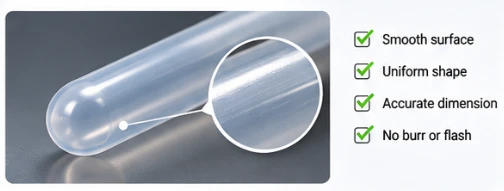
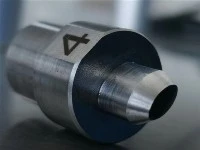
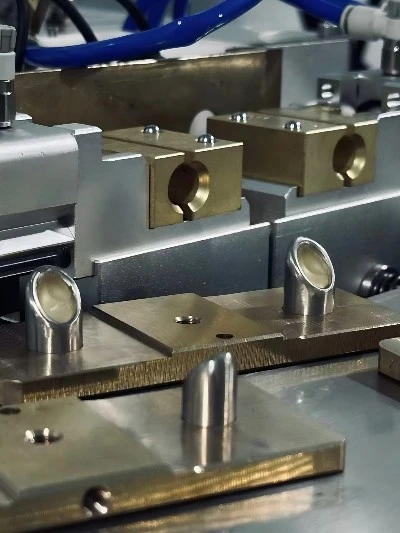
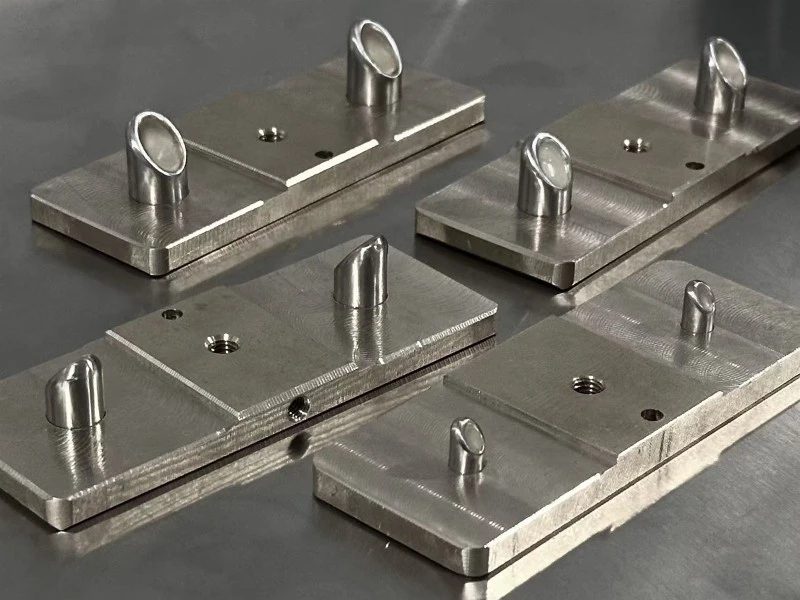
Also known as a tipping mold, the tip-forming die is a precision-engineered component integrated into a catheter tipping machine. Its primary function is simple yet demanding: to shape the thermally softened end of a medical-grade tube into a precise, flawless tip profile while maintaining strict dimensional consistency. A well-formed tip directly influences insertion comfort, minimizes tissue trauma, and ensures clinical safety.
How the Tip-Forming Process Works
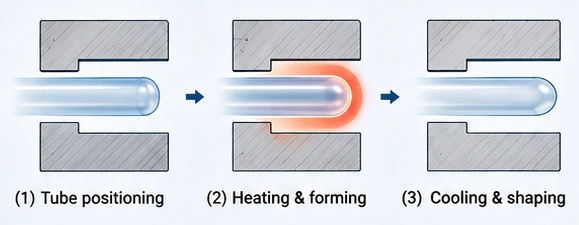
The physics behind tip forming relies on a delicate balance of thermal management and mechanical precision:
- Controlled Heating: The end of the catheter tube is locally heated until the polymer reaches its softening point.
- Precision Shaping: The softened section is compressed within the die cavity, where it takes on its final geometric configuration.
- Stabilization and Cooling: The material is rapidly cooled to lock in its final shape before ejection.
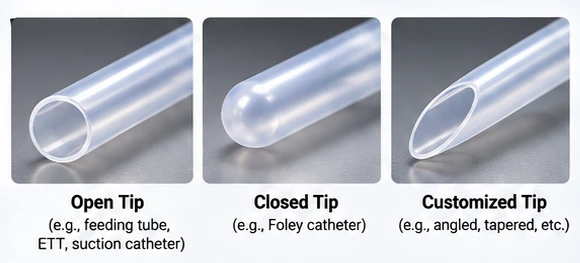
Depending on the clinical application, die configurations can vary significantly to produce different tip designs:
- Open Tips: Maintain a smooth, accurately formed working lumen.
- Closed Tips: Create a fully sealed, atraumatic, rounded distal end.
- Customized Tips: Are engineered for specialized medical devices and proprietary designs.
4 Key Pillars of Die Design and Performance
Designing a high-performance tip-forming die is no small feat. Manufacturers must carefully balance several technical factors:
Cavity Geometry and Surface Finish: The inner wall must be polished to a mirror-like finish to ensure smooth, burr-free tips and prevent material from sticking.
- Material Compatibility: The tooling must account for the distinct rheological and thermal properties of various polymers, including PVC, PU, PP, and silicone.
- Thermal Management: Efficient heat distribution prevents localized overheating and incomplete melting, ensuring consistency from batch to batch.
- Interchangeability and Modularity: In fast-paced manufacturing environments, quick-change tooling allows operators to switch between tube sizes and designs without overhauling the entire machine.
Where Precision Meets Production
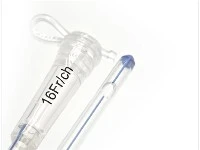
From Foley catheters, Endotracheal tubes (ETTs), and Feeding catheters to Suction catheters, Tip-forming dies play a vital role in the manufacturing of a wide range of critical care tubing.
Ultimately, exceptional catheter manufacturing doesn't rely on the machine alone. It depends on the synergy between advanced equipment, material science, and precision tooling.
At HJMED, our JVTF23 High-Frequency Catheter Tipping Machine and interchangeable tooling solutions are engineered to support flexible, reliable, and high-precision catheter production across a wide range of materials and sizes.